What the Las Vegas jewellery shows just told us about the future of design, and why it matters for British independents
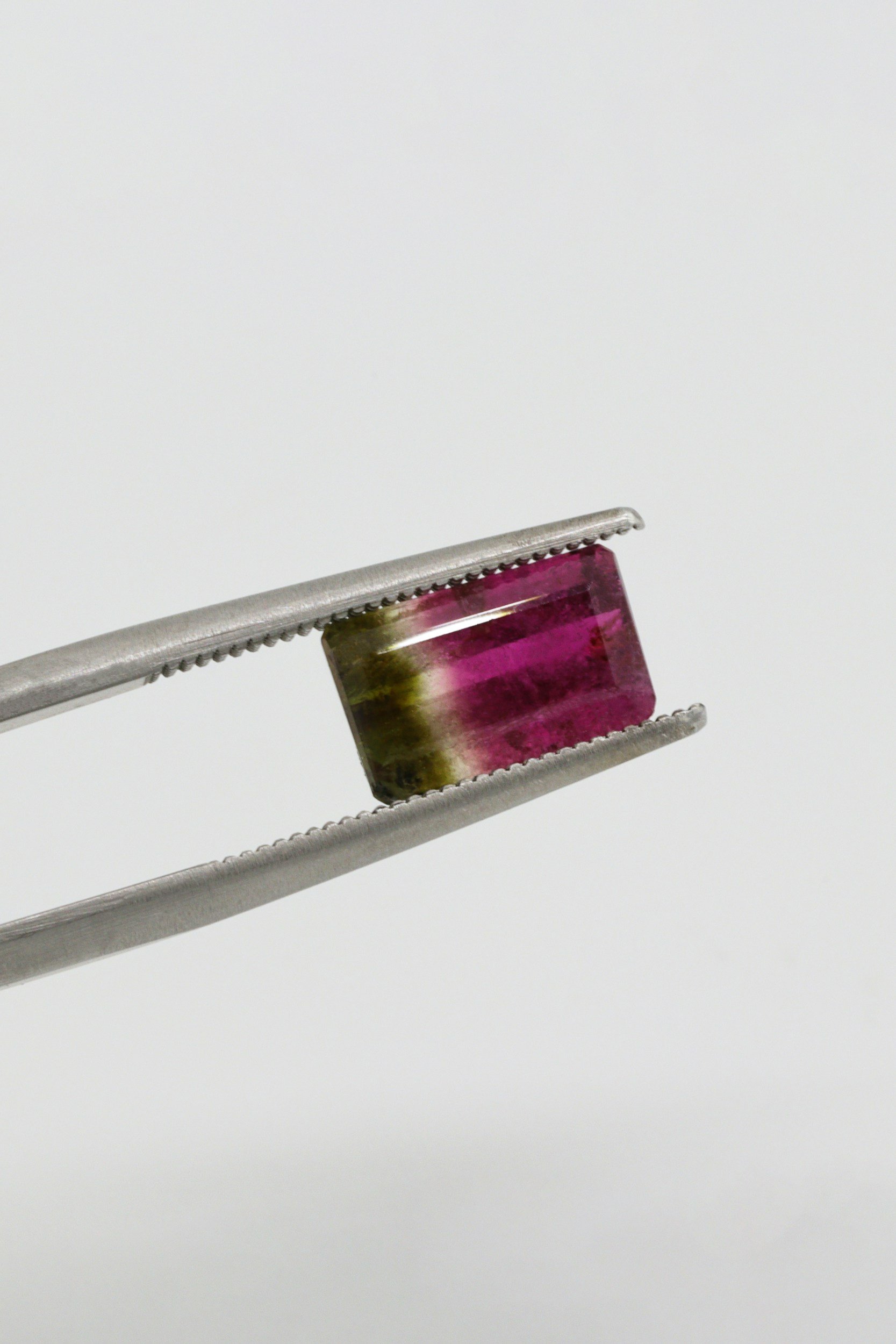
Watermelon Tourmaline
Every June, the jewellery industry descends on Las Vegas for two shows: Couture, held at Wynn, is where designers push boundaries and independent makers show retailers what they're capable of. JCK in the Venetian, is where the industry does its business. What connected them was a single question that every brand and supplier at both shows was trying to answer: how do you create something genuinely special when perfection can be manufactured?
The lab-grown effect on natural diamonds, and what it's actually changed
Lab-grown diamonds have reshaped the jewellery market faster than almost anyone predicted. According to data from jewellery insurer BriteCo, 42% of all diamond jewellery sold in 2025 contained lab-grown stones. In the engagement ring category specifically, that figure reached 48%. Lab-grown has gone mainstream, and it's done so partly because the quality case for natural diamonds, which used to be straightforward, has become considerably harder to make when the manufactured stone is roughly a quarter of the price.
From 2022 to 2025, the wholesale price of natural one-carat diamonds fell 26%. Lab-grown equivalents fell 74%. The retail jewellery market has bifurcated in response: lab-grown is settling into its role as accessible everyday luxury, while natural diamonds are being repositioned as symbols of geological rarity and permanence. Major mining companies have leaned heavily into provenance, scarcity, and the language of investment to justify the price differential. What this has done, perhaps unexpectedly, is change what luxury means in the context of a stone. When a diamond can be grown in a factory to essentially perfect specifications, perfection stops being the point. Rarity, individuality, and origin become the point instead.
Colourful & Characterful Stones Win Over Lab Diamonds
If there was one visual story connecting Couture and JCK this year, it was colour. Forget emerald tennis bracelets and sapphire halos - We are seeing gemstones chosen specifically for their character and individuality. Paraíba, watermelon tourmalines, Montana sapphires, boulder opals, alexandrite, gem silica. WWD's coverage of Couture described differentiation as the defining theme of the show, with designers embracing a range of ideas rather than converging around a single look.
The business logic behind this is worth unpacking for UK brands because it's not simply a trend cycle. Natural coloured gemstones are, by definition, impossible to standardise. In a market where a manufactured stone can achieve technical perfection, genuine imperfection and geological uniqueness have become a form of luxury that cannot be replicated at scale. Coloured gemstones are also performing well commercially at the higher end of the market. Millennial and Gen Z buyers, who are less attached to traditional diamond hierarchies, are driving much of this. In the UK, independent jewellers who have built expertise in specific stones are finding that the knowledge itself is a differentiator, because most of their competitors don't have it.
Gold as a precious material, not just a setting
The other dominant story at both shows was gold itself, but treated very differently from how it's usually deployed. With gold trading at over £4,000 per ounce in the UK earlier this year, designers at Couture weren't ignoring the cost pressure. They were responding to it creatively. Heavy chains, substantial cuffs, and sculptural forms put the metal at centre stage rather than treating it as a backdrop for stones. The point being that gold now carries the same weight of rarity, permanence, and intrinsic value that diamonds once held.
Alternative materials and the move away from expected luxury
Alongside gold and coloured stones, both shows featured a strong thread of designers working with materials that have no conventional place in fine jewellery. Titanium, steel, enamel, leather cords, carbon fibre. This isn't merely aesthetic experimentation. It's a response to the underlying pressures in the market: how do you make something that feels genuinely special in a market where the rules on gold and diamonds have been rewritten? Using materials in ways that no one expects, and making sure the craft justifies the choice often results in pieces that feel closer to art objects than jewellery.
What this means for independent British brands
The Vegas shows are predominantly an American and international market event, but the directions they signal travel quickly into Europe. The consumer shift toward rarity, provenance, and personal meaning rather than conventional luxury credentials is well documented in the UK market too. For a British independent brand, the practical read from Vegas is this: the space that's opening up is not for more beautiful jewellery. It's for jewellery that has a specific, defensible reason to exist - a stone expertise, a material story, a craft process, a design logic that can't be adopted by a competitor who simply spots the same trend. Jewellers who can capitalise on the rarest, most distinctive gemstones or unique processes with alternative materials will stand out in a crowded market.
If you're working through that question and would find it useful to think it through with someone who works in this sector every day, I offer a free discovery call for brands at any stage. No pitch, just a conversation about where you are and whether there's something worth exploring together.
You can book one here.
